


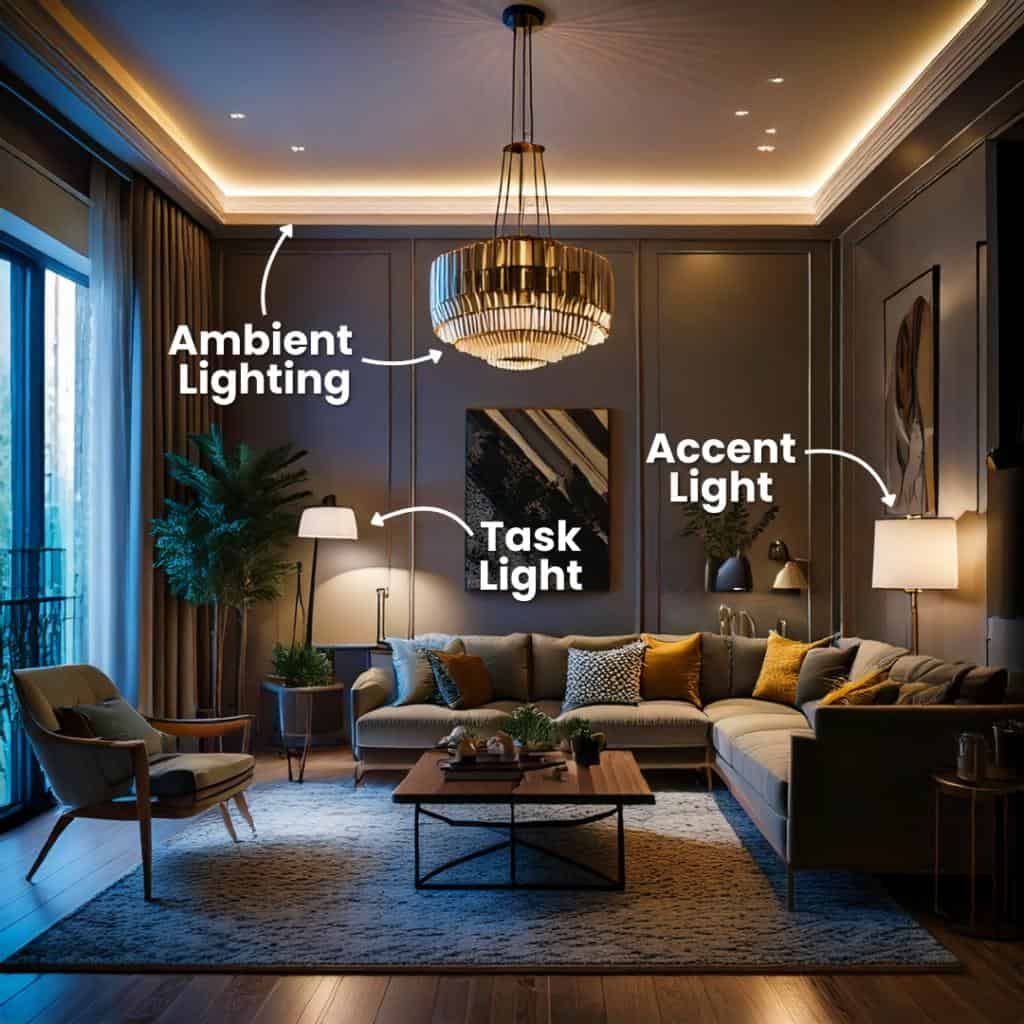
One of the biggest differences between a professionally designed home and an average one is layered lighting. Instead of relying on a single ceiling fixture to illuminate an entire room, interior designers combine multiple light sources to create spaces that are functional, comfortable, and visually appealing.
Layered lighting isn’t just about making a room brighter—it’s about adding depth, highlighting architectural features, improving everyday tasks, and setting the perfect mood for every occasion.
Whether you’re remodeling your home or simply updating your lighting, this room-by-room guide will show you how to layer lighting like an interior designer.
What Is Layered Lighting?


6
Layered lighting combines three different types of illumination:
1. Ambient Lighting
Ambient lighting provides the overall illumination for a room.
Common ambient fixtures include:
- Ceiling lights
- Flush mount fixtures
- Chandeliers
- Recessed lighting
- Large pendant lights
Think of ambient lighting as the foundation of your lighting design.
2. Task Lighting
Task lighting focuses light where you perform specific activities.
Examples include:
- Desk lamps
- Under-cabinet lighting
- Reading lamps
- Vanity lights
- Pendant lights over kitchen islands
Task lighting improves visibility while reducing eye strain.
3. Accent Lighting
Accent lighting highlights decorative or architectural features.
Popular accent lighting includes:
- Wall sconces
- Picture lights
- LED strip lighting
- Track lighting
- Display cabinet lights
Accent lighting creates depth, drama, and visual interest.
Why Layered Lighting Matters
Professionally layered lighting offers many benefits:
- Creates a warm, inviting atmosphere
- Makes rooms feel larger
- Improves functionality
- Highlights décor and artwork
- Reduces harsh shadows
- Adds flexibility for different activities
- Enhances your home’s overall value
Instead of depending on one bright ceiling light, layered lighting allows each fixture to serve a specific purpose.
Living Room Lighting


6
Living rooms often serve as gathering spaces, entertainment areas, and places to relax.
Ambient Lighting
- Ceiling light
- Chandelier
- Recessed lighting
Task Lighting
- Floor lamp beside a reading chair
- Table lamps beside sofas
Accent Lighting
- Wall sconces
- Picture lights
- LED shelves
- Fireplace lighting
Best Color Temperature
2700K–3000K
Warm white lighting creates a cozy atmosphere.
Kitchen Lighting
Kitchens require multiple layers because they combine food preparation, dining, and socializing.
Ambient Lighting
- Recessed ceiling lights
- Flush mount fixtures
Task Lighting
- Under cabinet lighting
- Pendant lights over islands
- Sink lighting
Accent Lighting
- Glass cabinet lighting
- Toe-kick LED strips
- Decorative shelving lights
Best Color Temperature
3000K–4000K
Neutral white improves visibility while cooking.
Dining Room Lighting


8
The dining room centers around one key fixture.
Ambient Lighting
- Chandelier
- Large pendant
Task Lighting
Minimal task lighting is usually needed.
Accent Lighting
- Wall sconces
- Buffet cabinet lighting
- Artwork lighting
Install chandeliers approximately 30–36 inches above the table for standard 8-foot ceilings.
Bedroom Lighting
Bedrooms should promote comfort and relaxation.
Ambient Lighting
- Flush mount ceiling light
- Semi-flush fixture
Task Lighting
- Bedside lamps
- Reading sconces
Accent Lighting
- LED headboard lighting
- Decorative wall sconces
- Cove lighting
Best Color Temperature
2700K
Warm lighting helps prepare your body for sleep.
Bathroom Lighting


7
Bathrooms require bright, shadow-free lighting.
Ambient Lighting
- Ceiling fixture
- Recessed lighting
Task Lighting
- Vanity lights
- Mirror lighting
Accent Lighting
- Shower niches
- Decorative wall lighting
Best Color Temperature
3000K–4000K
This range provides natural-looking illumination for grooming.
Home Office Lighting
Proper office lighting increases productivity and comfort.
Ambient Lighting
- Ceiling fixture
- Recessed lighting
Task Lighting
- Adjustable LED desk lamp
Accent Lighting
- Shelf lighting
- Decorative wall lighting
Best Color Temperature
4000K–5000K
Cooler lighting improves focus.
Hallways and Entryways
First impressions matter.
Ambient Lighting
- Flush mount lights
- Semi-flush fixtures
Accent Lighting
- Wall sconces
- Artwork lighting
For tall foyers, consider a statement chandelier.
Outdoor Lighting


8
Outdoor layered lighting improves curb appeal and safety.
Ambient Lighting
- Porch ceiling lights
- Garage lighting
Task Lighting
- Entryway lighting
- Stair lighting
Accent Lighting
- Landscape spotlights
- Garden lighting
- Pathway lights
Always choose fixtures rated for outdoor use.
Tips for Creating Balanced Lighting
Follow these professional design tips:
- Don’t rely on a single ceiling fixture.
- Install dimmer switches whenever possible.
- Choose matching fixture finishes throughout your home.
- Use LED lighting for greater efficiency.
- Mix decorative and functional fixtures.
- Avoid overly bright lighting in relaxing spaces.
- Highlight architectural features with accent lighting.
- Keep color temperatures consistent within each room.
Common Layered Lighting Mistakes
Avoid these common design errors:
- Using only overhead lighting
- Ignoring task lighting
- Choosing fixtures that are too small
- Mixing drastically different color temperatures
- Forgetting dimmers
- Over-lighting the room
- Neglecting accent lighting
Thoughtful layering creates balance and flexibility.
Frequently Asked Questions
What are the three layers of lighting?
Ambient lighting provides overall illumination, task lighting supports specific activities, and accent lighting highlights decorative features.
Why do interior designers layer lighting?
Layered lighting improves functionality, enhances mood, creates visual depth, and makes rooms more adaptable for different activities.
Can small rooms benefit from layered lighting?
Absolutely. Layered lighting can make compact spaces feel larger, brighter, and more inviting.
Is LED lighting best for layered lighting?
Yes. LED fixtures are available for ambient, task, and accent lighting while offering excellent energy efficiency, long lifespans, and a wide variety of color temperatures.
Final Thoughts
Layered lighting is one of the most effective ways to elevate your home’s interior design. By combining ambient, task, and accent lighting, you can create rooms that are both practical and visually stunning. Each layer serves a unique purpose, working together to improve comfort, highlight architectural details, and adapt to your daily routines.
Whether you’re redesigning a living room, upgrading your kitchen, or refreshing a bedroom, a thoughtful layered lighting plan will help every space look and feel its best. Start by choosing quality LED fixtures, selecting the right color temperature for each room, and adding dimmers for maximum flexibility. With the right combination of lighting, your home can achieve the polished, welcoming look of a professionally designed interior.