


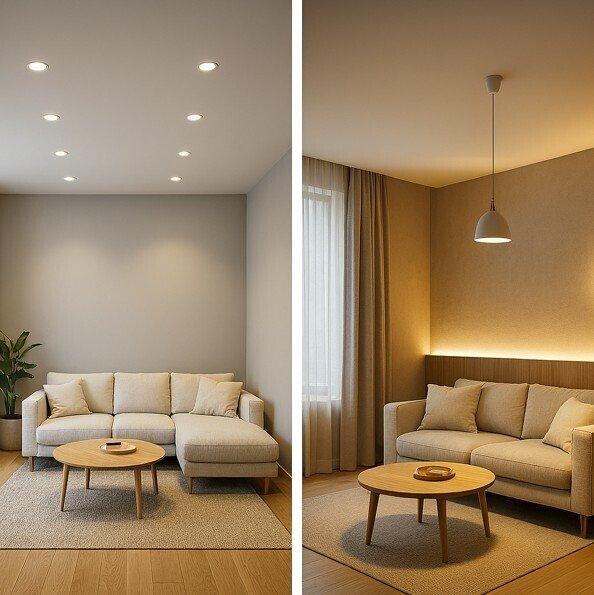
Choosing the right lighting can dramatically influence the look, feel, and functionality of your home. Two of the most popular options for modern interiors are recessed lighting and pendant lights. While both provide excellent illumination, they serve different purposes and create distinct visual effects.
Recessed lighting offers a clean, minimalist appearance that blends seamlessly into the ceiling, while pendant lights make a bold design statement and provide focused illumination. The best choice depends on your room’s layout, ceiling height, lighting needs, and interior design style.
This guide compares recessed lighting and pendant lights to help you decide which solution is right for your home.
Understanding the Difference


Recessed Lighting
Recessed lights, often called can lights or downlights, are installed inside the ceiling so that only the trim is visible. They provide a sleek, unobtrusive look and distribute light evenly across a room.
Pendant Lights
Pendant lights hang from the ceiling by a cord, chain, or rod. Available in a wide variety of styles, they provide both functional illumination and decorative appeal, often becoming a focal point within a room.
Quick Comparison
| Feature | Recessed Lighting | Pendant Lights |
|---|---|---|
| Appearance | Minimal and discreet | Decorative and eye-catching |
| Light Distribution | Broad, even illumination | Focused, downward lighting |
| Best Ceiling Height | Any height | Best with 8-foot ceilings or higher |
| Design Impact | Blends into ceiling | Creates a focal point |
| Installation | Requires ceiling access | Easier for existing junction boxes |
| Best Use | Ambient lighting | Task and decorative lighting |
Recessed Lighting


6
Recessed lighting is ideal for homeowners who prefer a clean, uncluttered ceiling.
Advantages
- Modern, streamlined appearance
- Even ambient lighting
- Works in nearly every room
- Doesn’t interfere with sightlines
- Compatible with dimmer switches
Best Rooms
- Kitchens
- Living rooms
- Hallways
- Bathrooms
- Home offices
- Basements
Pros
✔ Minimalist appearance
✔ Excellent general illumination
✔ Ideal for low ceilings
✔ Easy to combine with other lighting types
Cons
- Less decorative
- May require multiple fixtures
- Installation can be more involved in finished ceilings
Pendant Lights


Pendant lights combine functionality with style, making them a favorite in kitchens and dining areas.
Advantages
- Strong visual impact
- Focused task lighting
- Available in countless styles
- Creates depth and personality
Best Rooms
- Kitchen islands
- Dining rooms
- Entryways
- Breakfast bars
- Home offices
- Bedrooms
Pros
✔ Decorative centerpiece
✔ Excellent task lighting
✔ Wide range of styles and finishes
✔ Easy to customize
Cons
- Requires adequate ceiling height
- Can obstruct sightlines if hung too low
- Usually illuminates a smaller area than recessed lighting
Which Works Better for Different Ceiling Heights?
| Ceiling Height | Best Choice |
|---|---|
| Under 8 feet | Recessed Lighting |
| 8–9 feet | Either Option |
| 9–10 feet | Pendant Lights or Combination |
| Above 10 feet | Larger Pendants or Multi-Level Lighting |
For homes with lower ceilings, recessed lighting keeps the room feeling open. Pendant lights are better suited to average or high ceilings where they have room to become a design feature.
Style Comparison


Recessed Lighting Styles
- Modern
- Contemporary
- Minimalist
- Scandinavian
Pendant Light Styles
- Modern
- Farmhouse
- Industrial
- Coastal
- Traditional
- Mid-Century Modern
- Transitional
Pendant lights offer significantly more decorative variety.
Light Distribution
Understanding how each fixture distributes light can help you choose the best option.
Recessed Lighting
Provides:
- Wide, even illumination
- General ambient lighting
- Reduced shadows
- Uniform brightness
Ideal for lighting entire rooms.
Pendant Lights
Provides:
- Focused downward illumination
- Excellent task lighting
- Decorative glow
- Highlighted work surfaces
Perfect above islands, tables, and countertops.
Energy Efficiency
Both recessed lighting and pendant lights are widely available with LED technology.
LED fixtures provide:
- Lower electricity consumption
- Long lifespan
- Minimal maintenance
- Dimmable options
- Multiple color temperatures
Choosing LED fixtures ensures energy-efficient performance regardless of the style you select.
Can You Use Both Together?


Absolutely.
In fact, many interior designers recommend combining recessed lighting and pendant lights to create a layered lighting design.
For example:
- Recessed lights provide overall ambient lighting.
- Pendant lights illuminate the kitchen island.
- Under-cabinet lighting brightens countertops.
- Wall sconces or accent lights add warmth and depth.
This combination delivers the perfect balance of functionality and style.
Which Should You Choose?
Choose Recessed Lighting if you:
- Prefer a minimalist appearance
- Have low ceilings
- Need even ambient lighting
- Want lighting that blends into the ceiling
- Are illuminating large spaces
Choose Pendant Lights if you:
- Want a decorative focal point
- Need task lighting over specific areas
- Have ceilings 8 feet or higher
- Want to express your interior design style
- Are updating kitchens, dining rooms, or entryways
Frequently Asked Questions
Can recessed lighting replace pendant lights?
Recessed lighting can provide excellent general illumination, but it may not deliver the decorative impact or focused task lighting that pendant lights offer.
Can I install pendant lights with recessed lighting?
Yes. Combining both is one of the most effective ways to achieve balanced, layered lighting.
Which option is better for kitchens?
Many kitchens benefit from using both recessed lighting for ambient illumination and pendant lights above islands or breakfast bars for task lighting and visual interest.
Are LED recessed lights and pendant lights energy efficient?
Yes. Both are available with integrated LED technology or LED-compatible sockets, offering long lifespans and lower energy consumption.
Final Thoughts
Both recessed lighting and pendant lights offer unique advantages, and the best choice depends on your home’s layout, ceiling height, and design preferences. Recessed lighting excels at providing clean, even illumination while maintaining a minimalist aesthetic, making it ideal for whole-room ambient lighting. Pendant lights, on the other hand, add personality, visual interest, and focused task lighting, making them perfect for kitchens, dining areas, and entryways.
For many homes, the ideal solution isn’t choosing one over the other—it’s combining both. Pair recessed lighting with stylish pendant fixtures and energy-efficient LED technology to create a layered lighting design that is beautiful, practical, and tailored to your space.